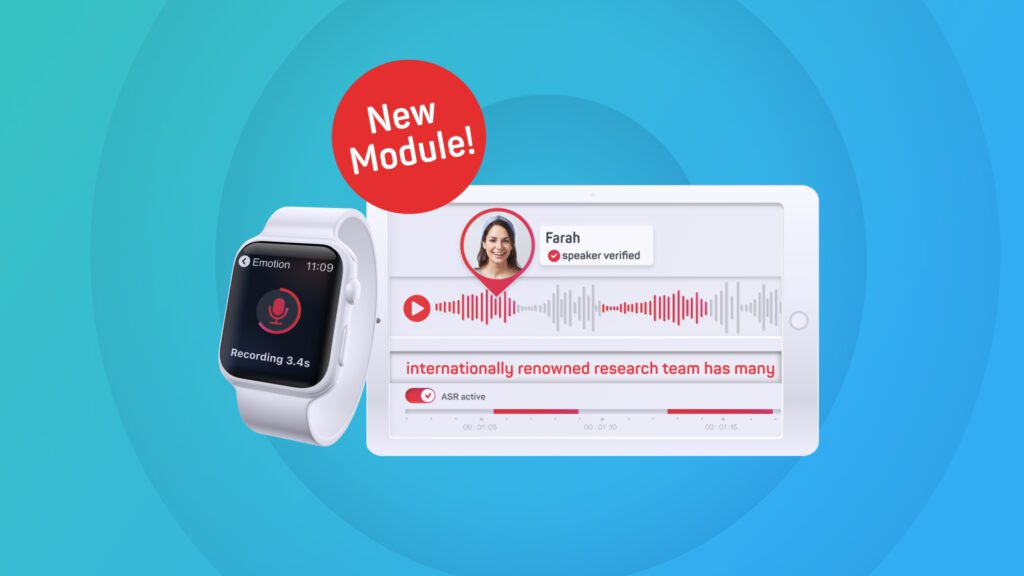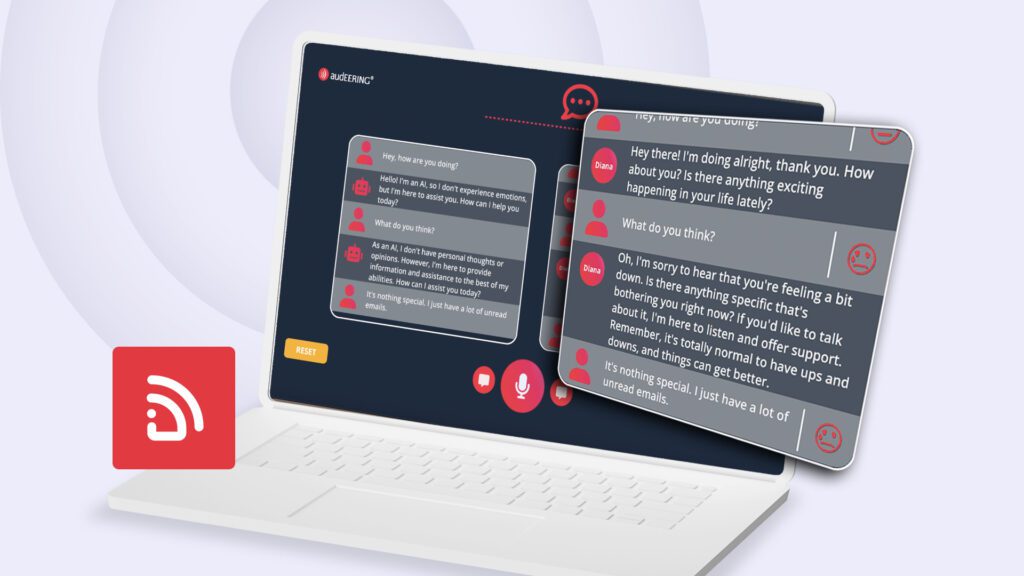


Hume AI’s Expression Measurement API is shutting down on June 14, 2026. If your workflows depend on it, you’re now looking for a replacement, and you’ve probably already come across “Top 10 Alternatives” lists that include Amazon, Google, and OpenAI. Those platforms are capable, but they’re not replacements for expression measurement. Analyzing vocal expression, prosody, arousal, and valence is a specialized discipline that requires validated models and a methodology that holds up to scrutiny.
We’d like to explain why that difference matters.
Not All Expression AI Is the Same
Serious applications require continuous dimensions such as valence, arousal, and dominance, captured robustly across speakers, languages, and recording conditions. That requires models tested rigorously, not just trained on curated datasets and shipped.
audEERING was founded in 2012 as a spin-off of the Technical University of Munich. Our core technology, devAIce®, is built on openSMILE, an open-source audio toolkit originally developed at TUM and now maintained by our team. Its feature set extracts 6,373 distinct acoustic features per audio segment. openSMILE has over 2,650 citations in academic papers and 3.7 million downloads on Hugging Face, making it one of the most widely used tools in the field. Our Expression Recognition models are scientifically validated, recognized by the European Research Council with a rare Proof-of-Concept Grant, and awarded the Bavarian Innovation Prize and the VDE Award.
31% of our team hold a PhD, and our research publications are publicly available. This scientific foundation isn’t a credential for researchers only. It’s the reason every customer can trust the output.
What This Means in Practice
The applications vary widely, but the underlying requirement is the same: results you can defend.
In UX and consumer research, the core problem with self-reported data is that people don’t always know – or say – what they actually felt. Voice fills that gap. It captures vocal expression as it happens, continuously, without asking anyone to reflect on an experience they’re still having.
In market research and qualitative studies, interviews and focus groups already generate exactly the kind of data audEERING is built for. The voice is there. Most analyses just ignore it. Adding vocal expression analysis means you’re no longer limited to what participants chose to articulate.
In healthcare and clinical settings, audEERING serves as a consortium partner in EU-funded research programs including ECoWeB (depression prevention), ERIK (autism), and WorkingAge (occupational health). The bar for methodological rigor in these programs is high by design which is precisely why they require a validated technology foundation.
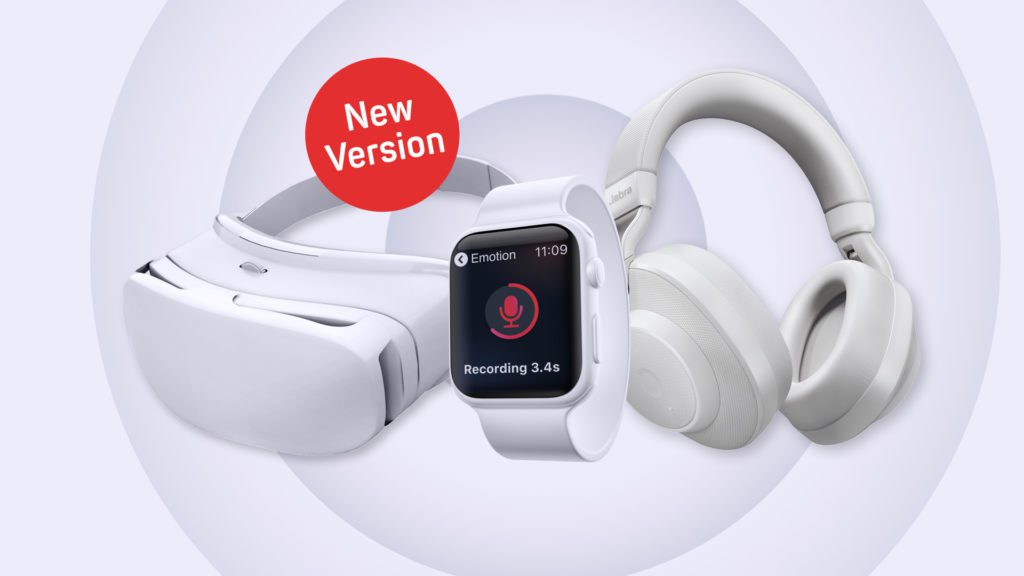
In enterprise and call center environments, devAIce® runs in production at scale as the voice AI engine behind Jabra’s Engage AI platform. Audio is processed locally, with no data sent to external servers, making it GDPR-compliant at the architectural level.
The Standard Has Already Been Set
Perhaps the clearest endorsement comes from the research world. iMotions is a multimodal research platform used by more than 1,300 academic institutions and enterprises worldwide. It synchronizes eye tracking, EEG, ECG, EMG, skin conductance, and facial expression analysis in a single environment. When they decided to add voice, they chose audEERING.
In the words of iMotions CEO Peter Hartzbech: “The human voice is adding another dimension to understand human expressions that drive behaviour and decisions.” Voice AI only belongs in that context if the methodology holds up to the same standard as everything else. Together we have also published joint best-practice guidelines for multimodal expression research.
See It in Practice
audEERING and iMotions are hosting a joint webinar where you can see how voice analysis integrates with multimodal human behavior research and ask your questions directly. Migrating from Hume?
Get in touch and we’ll walk through your specific use case.